
Shopping Cart
There are no more items in your cart

Goretex boots, pants in the brazzsocks, rope in the backpack, Nala is black. Okay, let’s go.
Each day spent in Northumberland was a rather turbulent inner dialogue, and exploring such a demanding place wasn't always simple. It’s not yet time to delve more deeply into Northumberland, but I’d like to link back to the previous article, where I talked about gritstone, and tell you about the rock that characterizes this area.
Fortunately, there are many places in the world and in Europe where one climbs on sandstone, and it’s often difficult to devote oneself to less known or more scattered areas like England. Nevertheless, I’ll tell you about it and hope to spark some curiosity and perhaps some exchange with those who’d like to travel through these areas.
Since I found Pietro’s geological knowledge interesting—and appreciated his contribution—I asked him to tell us something about the rock that also characterizes his local areas (Muschia and Corno alle Scale).
This is how Pietro tells it:
“England is not just Grit! There's also sandstone. The geologist in me winces: even Grit is technically sandstone. Yes, the grain is definitely coarser, but it’s still sandstone by scientific definition. However, British climbers are categorical: there's Grit and there's sandstone! And they’re right! Beyond the grain of the rock, the style and shapes are very different. Sometimes the sandstone resembles the forms in Font, sometimes it's super worked with many drops and tiny holes like in Kyloe, and sometimes it reminds us again of the layering of Grit (in the end, the formation processes are very similar between the two rocks, and the geologists are right again). The culprit behind all those driving hours from Italy is the Fell Sandstone, a rock formation that was deposited and formed about 340 million years ago, when a powerful river comparable in size to the Mississippi flowed through Northumberland. The shapes where we leave bits of skin are what remains from the movement of this river and its delta. Emblematic and fascinating is the Wave at Bowden Doors: a 'fossil dune' whose cross-bedding reveals the direction of its flow within the river system. The rest of the work has been done by erosion and alteration over the last millions of years, which, thanks to wind, rain, and ice, sculpted these rocks into rounded, holey, ‘tortoiseshell’ forms. Sandstone is a rock that always fascinates me—not only from a climbing perspective. In the end, without needing lab analysis, it's always readable to the eye of the geologist or the simply curious. The key to reading it is always the same, even if the places change. The 'graton' can be found in Font as in Bowden, the nodules protruding from the rock are in Albarracín as well as in Callerhues. Let’s open our eyes, enjoy it, and respect it.”
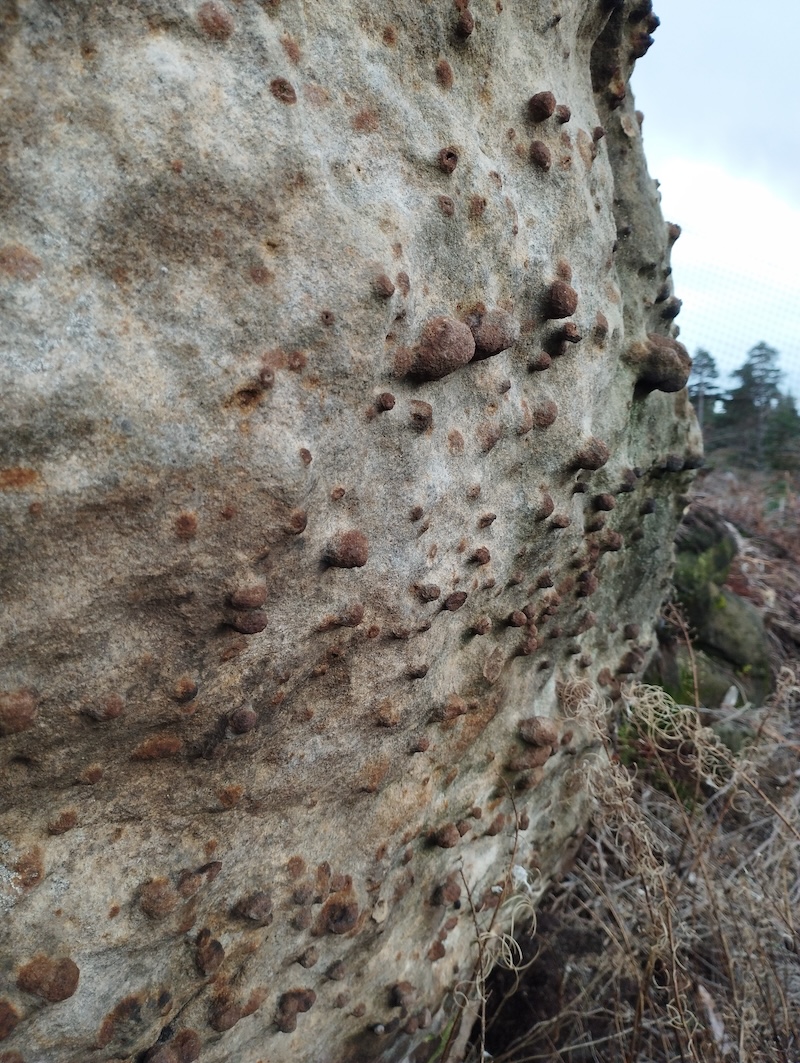
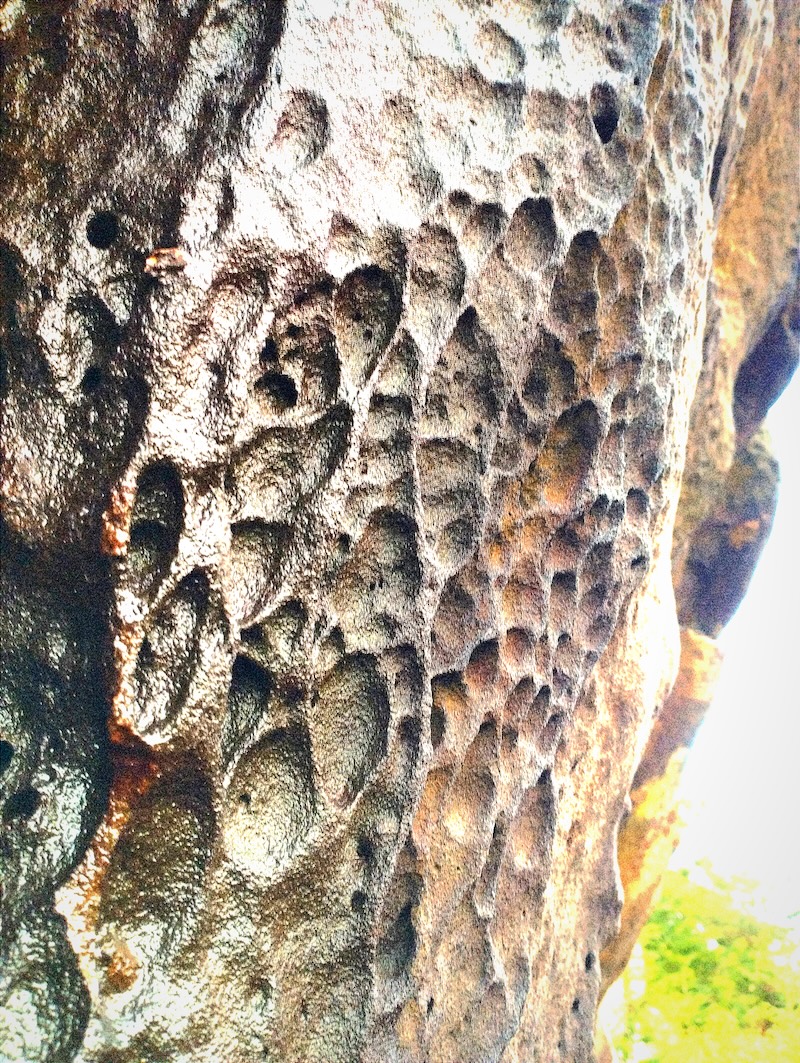
Northumberland is a region that demands a lot, both physically and mentally. The logistics are often challenging, the approaches not always easy and almost never dry, the boulders are widely scattered, and it’s hard to align weather and rock conditions, which need time to dry. There are many interesting lines and varied exposures, but it's still a gamble to focus on problems that require multiple sessions, as each session might be the last of the season—like dandelions at the edge of the Ice Age.
Later on, I’ll be able to tell you about my experience on The young and The prow, as well as go more in-depth about these areas.
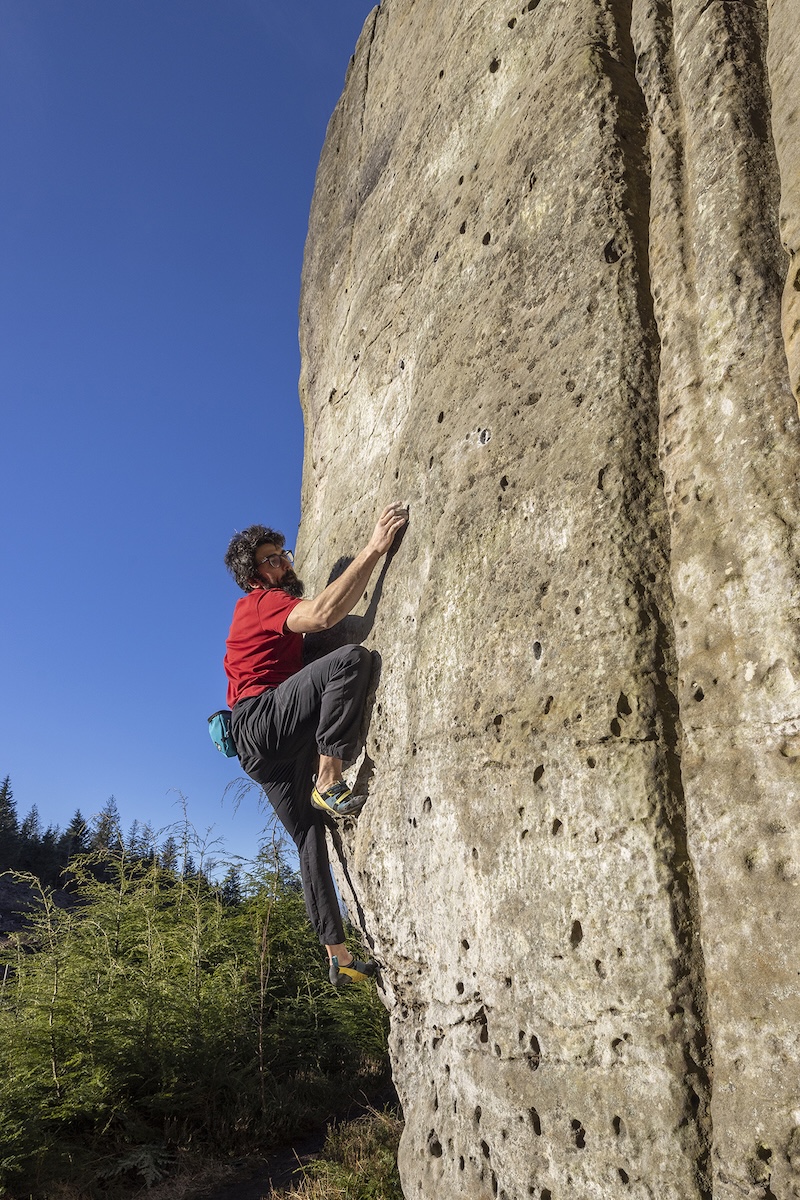
For now, I invite you to share with us—perhaps in the comments—your most logistically challenging experience.
M: We just have to follow the path.
T: Which path?
M: The path we will open!
T: ...
M: That path we will open!!!
Articolo: Matteo Arnodo
Ph: Mark Savage, Matteo Arnodo
Comments (0)